Thursday, 11 December 2008

Reflection
Well, it's finally over and I don't really know what to say in this group reflection it seems everyone has said what I wanted to! Well done everyone, I think Kartik is right in saying that we may not have got on well with each other at times because of other assignment pressures but on the day of the presentation we had great group chemistry and this reflected on the good audience reception. Even though Kartik did make a few technical mistakes; they turned out to be quite amusing. Even though group work got frustrating at times - different people and learning to work with different habits (due to spending to much time working together) I had a lot of fun researching, designing PowerPoint and best of all rehearsing and all the times we messing up and bursting into laughter. Felt like I was doing drama! It was difficult choosing the topic because everyone had different topics they were more interested in, but we managed to make a decision on discussing the statement 'Multicultualism does more harm than good'. Next, we had to decide what form to use and again we all agreed on doing a 'mock the week' style presentation, which would obviously include humour. Kartik took minutes every time we met up, as he insisted that he enjoyed it! We spent hours arguing out the statement, sociological, but when we presented our ideas to Meena in lecture she advised us that we look at more philosophical material, and so we went of the the library looking up liberalists and communitarianists as one panel would be 'liberal' and the other 'communitarian's'. The two panels would argue out there perspective on multiculturalism and the 'presenter' would mediate between us asking questions etc. After we had performed it and being fairly comfortable doing so , Meena took us by shock in questioning the whole of the presentation and its relevance to the statement 'Multiculturalism does more harm than good'. I think Jacek is right in this reflection that we focused more on the political side and perhaps we should have included or certainly started of with common sense type arguments, although this was expressed through the 'mock the style' like humour the presenter used at the beginning and end of the presentation. However, in answering Meena's question I think it reinforced what we had learnt and the relevance of it to the topic. Furthermore, I felt it showed that we had all researched the topic well as we all made a contribution in answering the questions by both William and Meena and there was no one speaker predominate, which was quite prevalent in most of the presentations. So, well done guys.

Wednesday, 10 December 2008

Reflection

We did it!! Well done group! Despite all the arguments on choosing the subject, despite all the days spent brainstorming then when we spoke to Meena she tells us we're on the wrong track, despite all the endless mind boggling reading we had to do, despite all them days organising each others roles, despite Akeela and her car accident (well done), despite not finding a group study room in the library despite one of us had always had to come late and despite the final day when the mouse wasnt working in the presentation WE DID IT!!! and we did it GOOD! Well done group. You all did really well in your parts way better than rehearsals. Towards the last few days it did get stressful especially due to all the other assignments that had to be in during that time. In the last two weeks I kept thinking what we were missing as it felt we had left something out however what we had learnt and when we brought our pieces to the table it did seem to work well. Initially we did seek to do a commonsensical knowledge based presentation but when Meena did the lecture on Multiculturalism talking about liberals and communitarian's we excreted faeces into our lower garments (we shit ourselves) Jaide and Habeeba approached Meena on this issue and then it was decided that we will present multiculturalism using these theories. Whilst brainstorming we came up with the idea of making it humorous and like a panel discussion then we all got on with work on our own parts. Rehersals did seem a mess at times but it was good fun. During the presentation the mouse had a delay which i didn't realise as all the practiceses in the library the mouse was always quick to respond which did startle me but i tried hard to keep my composure, the most worrying part was the humor and thank the ontologically existing God everyone found it funny. I was really impressed with the group as a whole when Meena asked the shocking question after weeks of preparation and 20 nerve racking minutes; "What does all that have to do with multiculturalism?". Yet once again we got the ball rolling and every group member answered the questions and showed that we were a group with group chemistry because quite often in the other presentations there is always the one person who answers, being host i was afraid it would be me! hahahaha. It was well worth doing if I had to do group work again I probably would choose the same group and the class was great support as well as Meena we have to thank Meena for not asking anymore difficult questions as we all know her questions can throw us all off. Well done every one.

Ahhhhh dont say its all over ..

In reflection to this module…. I have to say it was quite a lovely jubley experience. I thoroughly enjoyed group work as I felt the end result was very rewarding. Looking back on the morning of our presentation we had all worked very very hard but all felt the nerves of having to perform and remember our lines quite laughable scary. I enjoyed the unity of team work when challenged by questions from the audience and the arguments we used to direct our presentation towards but more so I thoroughly enjoyed the hilariously entertaining comical slides previewed within our presentation… well done guys but I stand firm when I say I believe I am a firm supporter of the communitarian's point of view…..as I appose to what I pretended to be in the presentation ….. My favourite lecture to date has to have been the lecture on pregnant addicts. I felt more prone to want to scream at the addict but the three approaches in relation to Iris Young made me see how we as a society should treat the addiction as well as the person and not just the situation.

Reflection

As a whole the presentation went well. All the hard word paid off in my opinion. I personally got a bit nervous at the beginning but once the presentation started I was comfortable. Our presentation topic was based on multiculturalism. The presentation was based on a T.V show with two sides which included panels of judge’s one side for the question ‘multiculturalism does more harm than good’, the other side going against the statement. My panel were against the statement. The opposite panel (jaide and jacket) were agreeing with the statement. While the presentation there was a lot of communication between the group members which was a good thing, it made everyone in the group comfortable. I enjoyed doing the presentation but am really glad that it is over.

Friday, 5 December 2008

We did 'IT'

Oh my... That was amazing. At the beginning of my speech my hands were shaking. Somehow I managed to control it and now I am proud of my achievement. I have never been able to control stress so well before. Furthermore, I expected a kind of challenging question and that is why I was able to make an answer to it. My face looked as If it were frozen solid and I endured eye line contact. I believe that saying something relevant is one thing while the way in which you do it is another. I think that both of them are important for markers... Jaide, Acceela, Calik and Habeeba I am glad I had opportunity to work with people like you. I was afraid about the humour part of our presentation but seems that our public and tutors enjoyed it. However, it is possible that our presentation had too much political aspects. That could be the reason for the challenging question. We were supposed to make an answer to our topic. We had a philosophical and political background to make a response but our conclusion was not clear enough. Next time we should be more focused on repetition. We should constantly show our response, to the given subject, throughout whole presentation. I hope it does make sense for you.
Goodbye

Thursday, 4 December 2008

Only few hours left...

There is no much time left till our presentation. I believe we have done pretty well when it comes about rehearsals. I must admit that sometimes I felt annoyed when some of us had to wait for others. I can understand that people have 1000000000000 things to do in very little time but I still tried to be on time whenever possible. Nevertheless, each of us spent some time on research. I am satisfied with my findings and so you do I bet. I worry a bit about the humour part of our presentation. I do not want to sound like a over serious person but I was raised in a country in which making jokes is rather not welcomed by our academic society. This is just one of many issues which outlines the difference between my original culture and the one in which I live at the moment. It is quite funny that without any previous purpose I just started writing about a cultural issue which is slightly connected with the title of our presentation. I guess it does not matter where you live because the struggling between cultures will reach you anyway. Either people with different culture will arrive to your country or you will come to other country for instance, for studying abroad. See you tomorrow ;]

Wednesday, 3 December 2008

Comment on Jaides 'Gender as performance'

I totally agree with your perspective on Habeeba's point (not that we want to single her out....well we might do haha). It is true that all the major religions maintain serious objections towards homosexuality. I recently saw a television documentary on Islam and Christianity from the times of ancient Rome til the present day. The show mentioned that in ancient times especially in Rome homosexuality and was regarded the same way as multiculturalism (linking in with Jaides point) it was sexual, cultural colonial diversity. Homosexuality I found was strangely reasoned by a Hindu scholar Jay lakhani, he says that as people go through many reincarnations life after life traits latch on to the soul, for instance if a man has been a woman five or six reincarnations in a row in previous lives he (or she, then) would have had a keen interest in men that trait would carry on to the next life and as he is a man now he doesn't understand why he has deep feelings for other men and no interest towards women, he just feels that it is more natural for him deeper. As I am a Hindu myself and believe in reincarnation I found his knowledge very useful and choose to agree with him. But is a very strange and humorous angle to perceive.

Tuesday, 2 December 2008

Multiculturalism does more harm than good. (Reflection and blog entry)

This is the topic we are using for our presentation and with 2 more days to go the group is feeling confident but nervous, hope all goes well. As a group we all researched this topic inside out and then in an attempt to make our presentation with a ' have I got news for you' slant we decided to split our groups into two panels the Liberals who believe in the freedom of the individual and equality for all under the national legislation and the communitarian's who believe in the individuals benefits lie in the community and that the community should come first adopting a almost utilitarian perspective. I personally think the names of each philosophy should swap as the 'Liberals' have a very 'communist' attitude in regards to how everyone should be treated equally full stop, almost like how everyone gets the same amount of ration or wealth in a communist regime which highlights one of the contradictions of 'liberalism' and its plight for the individual. The communitarian's however adopt a more liberal view than the liberals in as much as all is fair and equal in regards to benefiting the community, all groups and cultures are fine together but have to ajoin with majority of people. The problem however with communitarianism is that it can more than often supress an individual also in the given possibility that the individual is righteous yet the majority disagree which shows a moral dilemma or lack of ethical ideals in a society. I agree with Bauldrillard when it comes to the topic of 'seduction' and symbolic exchange showing that if we engage with one another there is less likely to be racism. The reality as he puts it is the other is 'eternal' otherness will always exist the only way to over come any issue is to realise that first a person is a human being than a national. Heres a very simple but informative article on how britain has always been a mixed race nation it even gives statistics up until 2001 on immigrant populations. http://www.woodlands-junior.kent.sch.uk/customs/questions/multiculture.html

Sunday, 30 November 2008

“Gender as Performance”
This lecture was by fair my favourite lecture of the module in the whole of the semester so far. Judith Butlers reading was fascinating. In class we first established that discourse was very important in the way words shape certain meaning in certain situations. The repetition of words, more specifically, and it associations with masculinity and femininity are embedded from the moment we are conceived. For example, pink is associated with females and blue with males. I agree with Butler that our sexual identities, in this way, are predetermined not only by our parents but by professionals which stabilise these ‘social constructions’. Meena’s example was very useful in hammering home the point – if a body by its physical was a female but the internal makeup suggested that the chromosomes was actually that of a males, doctors would encourage parents to ‘bring it up as a girl’ – whatever this might mean! Although I was aware that socially constructions existed I never really paid much attention to that argument in justification to homosexuality or even heterosexuality. I now agree with Butler that when we are born we are virtuously ‘sexless’ but our sexual identities in society becomes moulded by people around us who define what is right and wrong to believe, for the ‘ignorant mass’. The media uses serious political stances for it own benefits i.e. feminism and domestic house work and the bounty kitchen towel advert, where men dress up as women (to mock). Lastly, it is quite worrying that most women (as a generalisation) would view woman that either could not have children or did not want to have children as a lesser woman. I have been guilty of thinking this, myself. But Butler’s rhetorical question stunned me; ‘to what extent does a body get defined by its capacity for pregnancy? Why is it pregnancy by which that body gets defined?’ Just because one processes the ability to reproduce and conceive does not mean that she has to use it – the norm would explicitly suggest that as a female you must reproduce in order to be a female (this is certainly not the case). Females do not impregnate for most longer periods in their life, does that make them male? No! Females want females when they are young but we are constantly pushed away from this and manipulated into thinking that we should prefer the opposite sex because we can not be them (and this is commonly the norm), although their has been as outbreak of homosexuality – But Butler takes the same standpoint in view of homosexuality as she does to heterosexuality, as you can not develop a norm on what people do and suggests that once should be open to change. In accordance to Habeeba’s religious take on homosexuality or sexuality in general lies the double-edge-sword in the discussion. Religion determines sexuality to a certain extent i.e. Adam and Eve etc, which I believe is a fair argument. This thought is probably prevalent in pretty much all religions esp. Eastern religions. But this is quite odd since you take on a liberal perspective on multiculturalism but find it difficult that people freely choose to be homosexual? Does this mean that although people may have the freedom to do whatever they please we do not have to agree with it – or accept it? In agreement with Butler again, those that are fundamentally against homosexuality are indeed suppressed in their desires to become homosexual, since they dedicate so much time into ‘hating’ there must be some underlying interest. Take a look at this link. It questions the possibility that homosexuality is due to natural factors and least to do with nurturing, although this could play a small part. Furthermore its addresses a 'scientific' theory which suggests that those males who have numerous older brother increases their change of being homosexual by a third. The scientists debate on whether it is more to do with the distribution on hormones rather than genetics. http://uk.youtube.com/watch?v=_Osw05HGe5I

Friday, 28 November 2008

Homosexuality

During week 10 one of our work group topics was based on homosexuality. During the lecture we looked at the writer Judith Butler who wrote about gender trouble in her writing she describes that “the problem with drag is that I offered it as an example of performativity, but it has been taken up as the paradigm for performativity she carries onto saying that those who use drag it enables them to emphasise their identity. In her writing she states that masculinity and femininity are both constructed. She carries onto saying that those who are anti-homosexual they have a pressed desire. She also says that when a person is born they are put into a group where they are attracted to the opposite sex. She also questions femininity she uses the example of being pregnant she says that is pregnancy necessary for femininity? She says that it pregnancy does effect femininity, women who are not capable of having a baby are not seen as feminine she says that the norms that humans have been put in make people uncomfortable because they are unable to follow the norms of gender. She also says that there is a discursive enforcement of a norm, then she carries on to saying that it’s not just a norm of heterosexuality that is weak. She says if you say “I can only desires X you have created a whole new set of desires which are a position of unthinkable from the standpoint of your identity. She also says that those who claim that they have nothing to do with homosexuality in fact are utterly preoccupied by it. However during the lecture when this point was made it made me realise that there must be some reality towards this. As humans we do desire things. This then got me thinking about her point that we desire such things that standpoint our identity. I personal view about homosexuality is that I am a bit confused how to take it. If someone wants to be gay they can they have the freedom of choice to be but if I was to look at it from a religious view I think that it is wrong however, having looked at through Butlers writing my opinion has changed. I feel that one can’t help being gay. However, it may seem that in society today homosexuality is acceptable however, that may not always be the case there are may be people who have not accepted homosexuality or there might be people like myself who do not how to react towards homosexuality. However some homosexuals do not like to be referred either as gay or lesbian. The article shows that lesbians do not like to be referred as lesbians this may be a problem not only for homosexuals but also might be a problem for bisexuals as well. http://news.bbc.co.uk/1/hi/world/europe/7520343.stm

Multiculturalism does more harm than good…well that’s what they say …

Whoooa.. this is the topic SELCETED to be presented for our group presentation for Deviant Philosophy. Were all a bit nervous… but we’re all scripted & ready to present. I feel the concept in how the whole thing will come across to the audience is extremely important…… and as we have decided to add mass sketches of humour, wit and comedy I feel it’s pretty safe to say, its all going to come together marvellously. Before this topic came about, I didn’t really give much thought to the concept of Multiculturalism, I think often although we as a society understand we are part of “that” way of living, we tend not to question too much. So within this presentation, me and Habeeba take the liberalist stance and Jack and Jadie take the communitarianist stance… within this I found as a group, researching and developing arguments for both sides educated me with more of a communitarian view as appose to a liberalist view. I am all for rights of freedom, but more so on a wider scale as appose to a smaller scale. Freedom should be a global concept, where by we are NOT governed by the hierarchy but by our own concepts and ideas. Life, I believe and feel should be projected within the direction of equality, free will, preference, independence, choice and most importantly FREEDOM. As individuals we should be free to be exactly that….. yeah yeah I know … all in an ideal world. But until then as Dwight D. Eisenhower once said…“Only our individual faith in freedom can keep us free.” … so “faith” it is!!

Tuesday, 25 November 2008

Nietzsche and Superman

Hi again, this time I will continue talking about issue raised in my previous post. Last time I finished my post by mentioning Nietzsche's higher type. Few weeks ago we had a lecture titled "Nietzsche: revaluation of all values?". I can not say that I enjoyed that lecture due to my bias against Nietzsche. For me he was just an insane person. His written work was edited, manipulated and published by his sister. It was later used by Nazis people in order to justify their actions. Here is link: http://www.history.ucsb.edu/faculty/marcuse/classes/133p/133p04papers/MKalishNietzNazi046.htm

The lecture about Nietzsche have inspired me. I often observe how people behave and I try to understand their motives. After the lecture I noticed that many people still believe in the 'survival of the fittest' concept. They act like Nietzsche's noble man who does not have to care about others if he does not want to. What kind of behaviour is that? Does being noble and/or privileged can result in discarding responsibility? Imagine how our world would looked like if everyone would have behaved like that. We would be like animals which mindlessly kill each other. On the other hand, we as society can not force an individual to live according to our beliefs as long as he does not break the law. We cannot force some to bring up his own child. Notice how tricky social rules can be. Society can establish general law which everyone should follow. That law is supposed to make our life better. However, a person can follow the law in a country but he can still hurt others. There are many ways for it. You can treat people instrumentally like as if they were toys. You would barely find any situation in which the law could prevent using someone. Of course there is a difference between abusing someone, which punishable, and just using someone. That difference is liquid and hard to fix. In other words, the law allows you to hurt others but only to some extent. If a marked line is crossed you may expect that they will be punished. No matter how noble you feel you have to obey at least a part of social rules. However, you can always try to reach the top of the politic ladder and force your own way of life to others. That would make you a perfect superman. Do not you agree?

Sunday, 23 November 2008

Some thoughts about freedom

I would like to share with you about my point of view on freedom. During our workshop activities, connected with our presentation, I noticed that the term 'freedom' had appeared quite often. Freedom is something what many people believe they can achieve. According to MacIntryre: "From the standpoint of individualism I am what I myself self choose to be". So, if I put myself into liberal place I should feel liberty. Well, at least this is what I should feel when it comes about liberalism in theory. In reality no matter how much liberal a country can be, it always puts some constraints on citizens. Therefore, our freedom of choice is limited, for instance by law. We should obey it but we can still express our freedom in other aspects of our life. For example, we may ignore parental advice or the community around us. We are free to choose our own path as long as it does not break the law. However, if we choose such individual path we may not only hurt people around us, but also ourselves. Once we realize that we may start feeling stings of remorse. Individuals often behave like children who have to burn themselves in order to avoid harmful experience in future. They must deal with the consequences of their actions. An objective observer could notice that these individuals could have avoided many troubles if they had listened to their parents. I have seen situation like that not so long ago. Imagine a young woman, a strong individual, who ignores advice about having respect to yourself. During her rebellion phase she was cutting herself and cheated on her boyfriend. She ended up in a lunatic asylum due to her suicidal attempts. She was doing what she wanted and now she must deal with guilty. She behaved similar to Nietzsche's noble man who only cares about himself and does not need to respect any rules. Personally I think that Nietzsche's concept contains many flaws about freedom. I will write about them in my next post.

Saturday, 22 November 2008

Gender Trouble

I havent heard something in a long time that has made me go WOW. Last week was a very stimulating for me as in traditions of moral philosophy we studied MacIntyre and Utilitarianism which really made me think deeply about a lot of things and more over we had the lecture on Judith Butler which was fascinating as her thoughts displayed in the passage are so simple and obvious but it is strange how these simple thoughts get looked over when we search for deeper meanings. The common arguements for gender troubles are homosexuals and campness or as Baudrillard would put it 'frigid' or 'uptight' if a women does not accept a the sexual dress norm of femininity. Obviously as i am not a women and maybe lack of knowledge I did not know that if women do not have children that they are regarded as 'less' of a woman. In certain if not most of Indian society in India hold this view but i did not think it would be the same in the west (my prejudice I suppose). I clearly agree with Judith Butler on this account, "to what extent does a body get defined by its capacity for pregnancy?" (p.14). As i mentioned in class that as I cook and clean for a 'normal' asian male that is not a very masculine thing (which doesnt explain why the top televised chefs are male) but shows how a majorities way of uncritical thinking has its implications on the few that are 'different'. Some of these so called masculine men have very feminine voices but you dont see me complaining...sorry went off on a tangent there hahaha. Further more what was interesting was how Judith Butler explains that men only want/desire women due to the fact that men cant be women. I do agree (strangely) but on the contrary on the basis of social streotyping does that mean that homosexual men want or desire MEN because they are not men (in a masculine way), Like I said however that is on the basis of the stereotype the truth of the matter is that nowadays you cant tell who is gay and who isn't especially to the rise of the metrosexual. Who knows when the old conservative generation have died off babies bedrooms may not be painted blue or pink the norm might be yellow. Funny that.. how we went from early civilisations of everyone being free and diverse esp in ancient India and Rome (especially rome) where people were gay or bisexual or cross dressers to the middle era's up until late victorian england and just after the cultural revolution where these aspects were fround upon and sooner or later we will be back in to the roman way of thinking where it doesnt matter. Its like this universe is one indecisive child in a candy shop. Here is a series of Judith Butler on youtube talking to the European Graduate school in 2006: http://uk.youtube.com/watch?v=vjFZHfTJRUM

Friday, 21 November 2008

Race and Difference

  • Commented on Habeeba Rasools weblog

This lecture was based around Baudrillard. We first looked at Baudrillard, with William Pawlett, in terms of terrorism, which linked in with Meena’s lecture on race and difference. William explained the laws of value and its 3 levels that Baudrillard uses: Sign exchange, Economic exchange, and Symbolic exchange. He further claimed that sign exchange is predominant in consumer society, as this is the new level of control through signs and images which predefines us or even places us in a social category. These signs are profound, being that they psychological ‘trick us’. He used the example of McDonald’s incorporating the colour green to manipulate the public into thinking it is healthy. As green is commonly associated with being fresh, healthy and environmental friendly – this is in fact far from reality. He explicitly claims ‘affluence and violence go together; they have to be analysed together’ (Baudrillard C.S.1970:175). In this way the signs of violence are signs to be consumed i.e. cinema, news etc. Society loves to watch gore, but yet when it happens in real life it is frowned upon – but this violence ultimately is ‘uncontrollable, unobjectless, aimless violence.

More specifically he argues that terrorism mirrors the consumer society because the consumer society predefines freedom/liberation for women – not taking in consideration that white women maybe be different to that of say Iraqi women etc. Women terrorist in particular refuse this sign made by the western media.

According to Baudrillard ‘racism does not exist so long as the other remains the other’. Habeeba I think that you are right in your view in that other can not remain the other and that even if they did racism would still be a problem. In post-industrial societies thing is impossible, although we may be the same biologically (if that’s how you want to justify ‘equality’) the truth remains that our cultures, religions, race etc define us to a large degree. However, I do believe in, Baudrillard’s ‘foreignness and seduction’, that for one to understand the ‘other’ one must engage and play an active part in the ‘others’ life, so that the other is no longer the ‘other’ but their own.

Personally, I take a communitarian standpoint that your background is very important in determined not only your personal identity but your future. I do not think that the ‘equality’ that the law, order and consumerism sets are prompting people to learn about all the other different kinds of ‘others’ but the law in the west (which is most ‘Multicultural’). This quote by Hayek (Sandel, 1984) bring this to light, ‘it should treat all people alike, the desire of making people more alike in their conditions can not be accepted in free society.

Check out the link below. It focuses on all kinds of issues about race: biological, historical, geographical…There is also a survey to see what nationalities are ‘white’. Have a go and see how many you get right. Guck luck! http://www.understandingrace.org/home.html

Thursday, 20 November 2008

Multiculturalism

During them workshop groups’ one topic that we covered was about multiculturalism which also is our presentation topic. We decided to choose this as a presentation topic because we thought it would be an interesting topic and it would be interesting to debate about. During the lecture we learnt about two main theories which were Liberals and communitarians. The two argues debated about multiculturalism. Liberalism argument was based on freedom and equality. What liberalism says that one has the freedom to choose what culture they want to follow, based on the descion made they are seen equal however; liberals say that one has the freedom to choose but they have to follow the political law. According to liberals in a social outcome the result of descions procedure in which each person’s choices are given equal weight. Liberalism gives freedom for individuals to decide what they lead, it then allows them to reconsider whether they have made a good descion, and they then have the freedom to plan a better life. Liberals also say that as humans we live our life from the inside in accordance with our beliefs this then leads to a value, however, liberalism say that having the freedom to choose what you want to follow leads to a valuable life, they conclude on to saying that in accordance to live a valuable life a person needs the liberties to lead their benefits which contains freedom. However, communitarians criticize liberals what they say is that it is important for one to follow their culture they don’t have the freedom to choose what they want to follow. Rawls suggests that the structure of a social system can be apprasied; a position whose special virtue is that is allows us to regard human condition. A good example to explain communitarians argument in more depth would be that if a person was at university doing law because their grandma wanted them to do it according to communitarians that would be fine because that person is following its grandmas wish along as it keeps them happy however, according to Liberals the person has the freedom to choose what subject they want to do. This then can be used in a multicultural society if a person did not want to follow their culture according to liberals that is acceptable where as according to communitarians that is not acceptable. However, communitarians do criticise liberal’s theory, in many ways. Communitarians say that liberals don’t have the freedom to choose therefore they are not equal. Taylor’s thesis is that identity is partly shaped by misrecognition which is leading to diminished self-imaged and restricted mode of a being. However communitarians say that recognition is important where as liberal say that recognition is not as important as equality and freedom. Communitarians say that the displacement of moral accent from being in touch with feelings about right and wrong to begin in touch with other feelings. My personal view is they living in a multicultural society are a good thing I personally follow the liberal way I feel that if someone wants to follow a different culture they have the freedom of choice to do so. I personally feel that communitarians argue is unfair not everyone in a society wants to stick to their own culture therefore it is acceptable for them to follow a liberal way but communitarians say that it is not right for one to follow a liberal way because they will not be recognized. The lecture on its own was interesting the two theories have good points but on whole communitarians are a stronger argument rather than Liberals but I still feel that everyone has the freedom to express themselves how they want too. however, some peopel may not want to live in a Multicultural society. the article below argues whether multicultrualism is good. http://news.bbc.co.uk/1/hi/talking_point/3600519.stm

Tuesday, 18 November 2008

I found something!

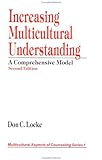
During my research I have found a great example for our topic: 'Multiculturalism does more harm than good'. I had been studying a book by Don C. Locke titled: Increasing Multicultural Understanding. It contains a lot of information about racism and prejudice. In that book you can find many examples which would justify our chosen topic. I personally think that Amish example would be the best one. Just take a look on this quote: After migrating to the United States in hopes of living in a free environment, the Amish were met with scepticism when they refused to fight for "their country". They were treated as traitors by people who could not understand their pacifist position. This is only one quote among others which inform us about lack of any positive connection between Amish culture and American society. According to the book, the Amish's beliefs are the main reason for separating themselves from the other part of Society. Amish are not interested in having any contact with the outside world which they treat like a sin. They do not accept our way of life and we do not want to understand their path either. I am so excited that my finding has been accepted by our module leader. I hope we make a good use of the Amish example in our presentation.

Monday, 17 November 2008

Racism & Terrorism

During the workshop group’s one topic that we looked at was racism and terrorism. I personally feel that racism is not acceptable as it may cause insecurity and lack of confidence for others. Baudrillard suggests that “racism does not exist so long as the other remains other, so long as the stranger remains foreign. It becomes to existence when the other becomes merely different that is to say, dangerously similar” (Jean Baudrillard (1993) ‘the melodrama of difference’, in the transparency of evil; essays on extreme phenomena, translated by James Benedict, verso, p.129) However, I don’t agree with Baudrillard’s view I feel that racism does exist one can not remain as the other for a long period of time there will be a point where the other is no longer than other therefore in a situation like that racism can happen. I personally feel that racism is something that can not disappear however, many philosophers have pointed out that racism is supposed to disappear as the conditions of a more advanced intermixture of differences become operative, my view for this is if it is an intermixture there is more chance of racism to happen. Racism starts off with conflict within two different groups within society. Racism also could happen within schools for various reasons. A good example would be the BNP. There is a large amount of people who have joint the BNP which shows that racism can not disappear. The link shows that the BNP admit to race crime. http://news.bbc.co.uk/1/hi/uk/3894529.stm Baudrillard also mentions the sign exchange value which can be also known as the laws of values, what Baudrillard believes that there are three levels of signs which are; economic exchange value, symbolic exchange value and sign exchange value. He believes that we are all linked with the three he believes that the economic exchange is based around consumer there must be consumer value, he believes that economic and symbolic exchange together have no value for example If a mother was to buy her daughter a necklace, the daughter decided to keep the necklace as a symbol of her mother the necklace will have no economic value towards it. Baudrillard then uses the sign exchange value as a example for terrorism he says that by using the sign exchange values terrorism ‘mirrors’ consumer society in that it predefines freedom “for Baudrillard terrorism and terror are primarily strategies of the system: of the state, the law, the market, the code. What is ordinarily called ‘terrorism’-meaning organised violence and untimidation directed against the dominant system- is for Baudrillard, The ‘mirror’ of the system’s terroristic can hold over its population” (consumer 1910/1998;198; Trans. Evil, 1990/1913:75-80) Baudrillard also says that the sign exchange values effect ones every day basis.

Friday, 14 November 2008

The Introduction aka Part One on Deviant Philosophy ...

No its not porn..... but you can click only if over 18 years of age ... (click, click, click...) your far too old to enter this site.. (".)
PART 1…Hmmmmm, I can honestly say .. I LOVED the Deviant Philosophy lecture aka Pregnant Addicts.
It’s not the most gracious of subject to discuss but its most defiantly a topic that should be thrash out a tad bit further, maybe even quite literally (“.) lol…. No but on a serious note, the discussion of this topic should really evolve well past our MX lecture room and more so on a wider scale within society, maybe that’s the change we need to progress as a nation…well, you can never say never (“.) I was quite apprehensive when selection what subject group I wanted to study and be in… and of COURSE which one of the lecturers I was to sell my soul to but Kartik me old pal made that very important decision quite easy and it was elected that as a group “Deviant Philosophy” was the daddy-ooo…. (Wipe of the brow)… I felt a bit odd about Deviant Philosophy but only because I thought “jack the ripper” seemed more of an interesting topic and it seemed me old chap Jaide agreed but we were ruled out by the rest of the group….painful but if you don’t speak up, you get trampled on..it’s a long road ahead for you door mats.
So off they went to pop our names down … as Meena stressed afterwards “if you’ve put your names down but haven’t chosen a second group”… you will die, no sorry she actually explained this process of a first and second choice MUST be made, (for obvious reason) and so in this moment of apprehension I wickedly prayed we wouldn’t be excepted for Deviant Philosophy
“God help me… I’m a Muslim, answer my prayers dude”
but accepted for “Jack the Ripper”
insted :) how deviant and sly does that sound, this dude killed, mutilated and murdered prostitutes, which isn’t too bad if you weren’t living in the mid 19 century. More closely autumn of 1888, if so bad luck chuck … but who often subjected them to immense amount of abuse, torture and pain,..which isn’t too bad either,…. I’m a positive person, what can I say, they sold their bodily shells for a few shillings…their in a better place but after all that “here” is lil old me asking “GOD” to subject me and my group to a few weeks of studying old Jacky boys worldly sins
… oooo and it gets better, there’s a trip to London too whoooooo…. Oh Allah forgive my sins, no not for stealing, or backstabbing or being a tad bit gay on a Friday … but for asking for THIS!!
Gosh and after all that … nothing happened :) as Deviant Philosophy won….which of course I’m so glad for as I’m loving these sessions with Meena. But that just proves, where is god when one needs GOD…I don’t actually require god, its ALLAH OH MIGHTLY IM LOOKING OUT FOR, lol yeh like that’s going to save me….
END OF PART ONE
We shall resume my story telling tomorrow….(In a crappy American soap style accent…no seriously it wont have the same effect if you don’t use the accent… yeh you got it first time, you got a knack for accents, you should try a bit of acting… you would make a mill) and on the next exciting episode of Deviant Philosophy by Keek, (no one else because the rest of my group are boring.. especially heebee jeeebeez, the name says it all) we will hear all bout her views on Pregnant Addicts, societies views, ideas about whether they should send pregnant drug abusers to jail, the concept behind the actually ADDICTION, some links to real life stories and we’ll also look at some pictures too, whooooa illustrations make things so much easier…..oh and I promise to be more serious too

Thursday, 13 November 2008

Idleness

During the workshop groups one of our topics was based on idleness the lecture was interesting, which made me realize that as humans we take work as something valuable. Bertrand Russle defines what work is in two ways 1) altering the position of matter, 2) telling people what to do. He concludes onto saying that the second kind of work is capable of indefinite extension which means that there are those who take orders from others and there are those who give orders usually those two ideas are given by men. Many people may see idleness as being lazy. my personal view about idleness is that people who are labeled ‘idle’ I see them as being laid back who have a relaxing attitude towards things and sitituations, some may argue that idleness is being ‘lazy’. According to Bertrand Russle “for us all to be idle in order that we should all have our mouths full of bread” therefore it is ok for a man to be idle if he provides for himself, Russel gives the example of ‘landowners’ “the land owners are idle, and I might therefore be expected to praise them, unfortunately, their idleness is only rendered possible by the industry of others; indeed their desire for comfortable idleness is historically the source of the whole gospel of work”. However, Russle also says that work is a good in itself he carries on to saying that the morality of work is the morality of slaves, and the modern world has no need of slavery. He carries onto saying that idleness was rejected for religious reasons but the reasons now that idleness has been rejected can mainly be based on economics and consumer goods. However the idea of idleness is Non work rather than Leisure, I personally refer idleness to some form of leisure maybe because I can be idle at many times. Russle suggests that work is not a key of leisure “it is insured that the unavoidable leisure shall cause misery all around instead of being a universal source of happiness”. Most humans enjoy being idle nearly everyone can be idle at times, Oasis have given a good example about being idle with their song ‘the importance of being idle (2004) ’ the link below is a link to the song http://uk.youtube.com/watch?v=jySfU10IQu4 . One example that was used in lecture to show people being idle was the classic song by the betealsim only sleeping’ (1966) the link below shows the lyrics, the lyrics give an example what idleness can actually be. http://artists.letssingit.com/beatles-the-lyrics-im-only-sleeping-p2bz29s I agree with Jaide that Meena’s lecture was an eye opener towards idleness. i also agree with jaide that it is unfair for for those who are exploited, However, i do not agree with jaide that is unfair for those who are being idle my personal view is that people can be idle and work at the same time. My view about being idle after the lecture was that people can be idle if they want too. Meena used the example of the Bollywood movie ‘dil chata hai’ to show a different way of being idle. I thought that was a good example because that’s how I usually referred of people being idle, having a good time with their friends a just relaxing.

Tuesday, 11 November 2008

Idleness... one likes so very much (".)

Idleness, this lecture was quite insightful and rather interesting. I have never really given any thought to idleness although am guilty of this very often … sinner I know. The different definitions of idleness I found related more so to day to day things like….. The first site I found…. *Having no employment *Groundlessness: the quality of lacking substance or value; "the groundlessness of their report was quickly recognized" *Faineance: the trait of being idle out of a reluctance to workwordnet.princeton.edu/perl/webwn And the Second site I found ….. adj., i·dler, i·dlest. Not employed or busy: idle carpenters. See synonyms at inactive. Avoiding work or employment; lazy: shiftless, idle youth. See synonyms at lazy. Not in use or operation: idle hands. Lacking substance, value, or basis. See synonyms at baseless, vain. http://www.answers.com/topic/idle But this isn’t what Meena was discussing within the lecture. The type of Idleness Meena referred to detailed more so about lack of activity within everyday things we do and more so referred to the willpower and determination we show while under taking these everyday activities. Example applying yourself within work, university, college or school… being able to apply yourself mentally as well as physically and understanding the spiral effect of your actions when i.e., going to drop the kids off to school, knowing that your extra 10 mins in bed day dreaming will insure they are late. Within this Meena referred more so to the teachings of Bertrand Russell and detailed that ‘there is far too much work done in the world, that immense harm is caused by the belief that work is virtuous’. Here Russell progresses to argues in favour of a four-hour working day and begins to perceive the idea that the argument for laziness seems to deserve serious consideration within society today. Bertrand Russell refers… “work is of two kinds: first, altering the position of matter at or near the earth’s surface relatively to other such matter; second, telling other people what to do’ ….to “work” in two ways, the first one is the concept of altering the position of matter and the second concept is telling people what to do and within this he extends to perceive the idea that these concepts are usually given by men, whether you are one to take orders from others or are a director of orders, where by you instruct others. Personally, my view on Idleness is that in society today it is very hard NOT to be idle, in a sense it is all around us… within work/university/schools technology takes over etc, helping us along the way to be lazzy-er, more relaxed…within the language we use, “chill out… relax… lets go chill..” often these words are used within the groups of people we socialize with and this concept of idleness isn’t too far behind. Being chilled or laid back can be perceived as signs of lazz-ness and not having such drive to be able to as successful but as Bertrand Russell emphasizes “for us all to be idle in order that we should all have our mouths full of bread” if you are the hand that feed you then idleness is more acceptable, rather then judged or frowned upon as you are only biting the hand that YOU feed yourself with.

Idleness

"Work is of two kinds: first altering the position of matter at or near the earth's surface relatively to other such matter; second telling other people to do so." I found this the most hilarious yet most true statement of our human civilization. Bertrand Russells passage was very humorous but strangely in touch with reality. I found his example about the pin production industry very well thought of and optimistic however I dont think the worlds leaders would try such an optimistic approach of making people work four hours a day. I found it almost Marxist in the way certain phrases were worded such as "morality of work is the morality of slaves" and in regards to moving matter "The first kind is unpleasant and ill paid; the second is pleasant and highly paid". What I particularly liked was idea of how the rich are not seen as idles (double meaning) as they rely on exploitation of people beneath them in order for their idleness. As a matter of opinion i do not agree that people shouldn't save i think it would only be eligible not to save finance in the ideal world that Bertrand Russell speaks of but in the world we live in now where anything is possible and everything we buy feeds the fat capitalist cats manipulating our society then saving becomes a means of mental security in the least. I do agree with Bertrand Russell on the issue of working to hard. I think it would make Aristotle turn in his grave knowing that people can often fall in love with the means and forget about the ends, meaning people work so hard all their lives trying conflict poverty or compete on income and chasing pay packets then actually realise that they have enough money to relax and now what they are chasing is on the foundations of greed. Heres a really funny music video on idleness and when it goes terribly wrong http://uk.youtube.com/watch?v=XaNuB52_Irc
Idleness

The lecture on idleness was very interesting. It is supposed in mainstream society that idleness is something which should be rarely exercised. We are constantly encouraged to put our effects in our work, both in educational success and in careers. We value work as a virtue – it defines the kind of people we are, in terms of how others perceive us. Taking long periods off work is forbidden. We feel guilty to spend even a couple of hours in relaxation when we know we have piles of work to do. Meena’s lecture an eye-opener since idleness was portrayed in a ‘good’ light. After discussing these issues we looked at the writing on Idleness by Bertrand Russell. He takes the stance that ‘there is far too much work done in the world, that immense harm is caused by the belief that work is virtuous’ – this is exactly what I had thought before the lecture.

Russell further defined what work really is; which was quite comical and depicts human being as superficial and not at all important in the way we think ourselves to be. He claims that ‘work is of two kinds: first, altering the position of matter at or near the earth’s surface relatively to other such matter; second, telling other people what to do’. More simply, people engage in move things around or being and/or bossing other around. So, should work be virtuous even if advanced technologies means we produce enough goods in this consumer society to live in a communist way, where people can be allocated a couple of hours of day to work, and spend the rest of their day in idleness. It is hardly fair that those that are ‘money hungry’ spend most of their time in idleness but those who are exploited by such people are enslaved and seen to behave in deviance or seen to be a ‘slacker’ or even ‘waste of space’ who is con contributing to society.

There is interview article interviewing Tom Hodgkinson who wrote a book called “How to be Idle”. It is a detailed account of how idleness is more beneficial than not. And further, it does not make much sense to work all hours of the day when advanced technology means that is takes less time then if we were to for example, work out maths, manually, but since we are easier equipped with a calculator cutting half the time it would take to work out manually. Why does this mean we have more leisure time? The lecture on idleness was very interesting. It is supposed in mainstream society that idleness is something which should be rarely exercised. We are constantly encouraged to put our effects in our work, both in educational success and in careers. We value work as a virtue – it defines the kind of people we are, in terms of how others perceive us. Taking long periods off work is forbidden. We feel guilty to spend even a couple of hours in relaxation when we know we have piles of work to do. Meena’s lecture an eye-opener since idleness was portrayed in a ‘good’ light. After discussing these issues we looked at the writing on Idleness by Bertrand Russell. He takes the stance that ‘there is far too much work done in the world, that immense harm is caused by the belief that work is virtuous’ – this is exactly what I had thought before the lecture.

Russell further defined what work really is; which was quite comical and depicts human being as superficial and not at all important in the way we think ourselves to be. He claims that ‘work is of two kinds: first, altering the position of matter at or near the earth’s surface relatively to other such matter; second, telling other people what to do’. More simply, people engage in move things around or being and/or bossing other around. So, should work be virtuous even if advanced technologies means we produce enough goods in this consumer society to live in a communist way, where people can be allocated a couple of hours of day to work, and spend the rest of their day in idleness. It is hardly fair that those that are ‘money hungry’ spend most of their time in idleness but those who are exploited by such people are enslaved and seen to behave in deviance or seen to be a ‘slacker’ or even ‘waste of space’ who is con contributing to society.

There is interview article interviewing Tom Hodgkinson who wrote a book called “How to be Idle”. It is a detailed account of how idleness is more beneficial than not. And further, it does not make much sense to work all hours of the day when advanced technology means that is takes less time then if we were to for example, work out maths, manually, but since we are easier equipped with a calculator cutting half the time it would take to work out manually. Why does this mean we have more leisure time?

http://www.motherjones.com/arts/qa/2005/06/how_to_be_idle.html

Sunday, 9 November 2008

Pregnant Addict
The workshop on pregnant addicts was fascinating as I never really thought about this issue before, and bought a totally different light upon the subject. There are 3 approaches, in relation to Iris Young to ‘punish’ the pregnant addicts are: first to use punishment itself either deterrence or retribution and second the treatment approach or third the ethics of care. More broadly, they are categorised as the punishment approach, treatment approach and Empowerment. Women in the past have been punished in harsh ways, the judicial system have passed prejudice judgements against race and social background/upbringing towards drug victims. The real issue is: should a pregnant addict be labelled as a bad mother? The answer to this is quite problematic. I agree with Kartik, that living amongst a variety of citizens it is difficult to determine why and how pregnant addicts should be punished if at all. It depends on the type of person which will essentially determine there reaction to that kind of punishment or certain approach. For some punishment will be best suited, for them to deter and other rehabilitation. However, I think that pregnant women should not be classed as bad mothers as we are merely comparing them to our perception of good mother, as we discussed in class. I also agree with your point in reference to Foucault that “'everyone has the duty to know who he is' in all aspects in regards to 'recognize temptations' and 'acknowledge faults'”. A point we did not touch upon in class but might be worth making is that maybe the women addicted to some substance did not choose to get pregnant and was merely an accident. And in addition ruled out the notion of having an abortion as she may not been able to afford it, especially in the USA seen as they do not have a welfare state. As Meena mentioned in her PowerPoint, the reasons that women might not confess or approach any one about there problem are: They are to scared that they may get punished before even receiving any kind of understanding or help as ‘Health care professionals are obliged to report drug use thus violating privacy rights’ Fear of loosing their child I do not think that fear of punishment ultimately stops a women for committing this crime, as she may not even recognise the law or be subject to it. She may not realise the importance of life, maybe because the lack her lack of experience, self worth etc. I’m not ruling out the possibility of evil women in the world, think of Mira Hindily! Moreover, I do not think that pregnant addicts should be punished and like the idea of empowerment - a process in which individual, relatively powerless persons engage in dialogue with each other and thereby come to understand the social sources of their powerlessness and see the possibility of acting collectively to change their social environment’. (Young 1997: 91) I do agree with you in some essence Habeeba, that pregnant women might look ‘selfish’ but I think that more often then not they do care about their child – Is this not a natural instinct within women (ethics of care etc)? It is their bodily reaction that resists them to stop. It is not something you can give up over night – it is something which is almost out of their control. You have implied that the cultural measurement of this kind of act is an adequate one, but is it not a biased given that this measurement changes in any given time, place, culture and society? For example, if the law stated that women where free to inflict pain on their bodies; I think most would be fine that pregnant women were addicts. You haven’t commented on whether you believe pregnant women should be punished? Take a look at this interesting link, on procedures taken to empower pregnant addicts and professional help that can be offered to them get through their pregnancy healthily as well as supporting mothers to give up misuse of drugs, in Scotland. http://news.bbc.co.uk/1/hi/scotland/edinburgh_and_east/5000430.stm

Pregnant addicts

The topic discussed in the first week of the workshop was based on pregnant addicts. Personally I feel that it is wrong to carry on taking drugs while pregnant for the simple reason the person who is pregnant is not just harming herself but also is harming the baby which could lead to disability. The images show that affects of what could happen if a pregnant woman was to take drugs while pregnant. I personally think that having drugs while pregnant is a bit selfish. Some may say once you are addicted to drugs it is hard to stop, surely the mother to be has the baby in mind while taking drugs, however, I do understand that temptations do make a person give in and weak, nevertheless culture suggests that humans have self-control therefore what is stopping these women who are addicted not to take drugs and to consider their babies life?. Having looked at Iris Marion Young during the workshop, what Iris suggests is that there are three approaches of punishment which are punishment itself which includes Deference and Retribution, The second being treatment which is based on ethics, Thirdly improvement which includes individualising and developing social solidarity. Majority of cases where women have been punished for using drugs while pregnant involve ethnic women, many health care professionals are obliged to report the use of drugs while pregnant. The link shows a real story about a pregnant lady addicted to drugs http://www.advocatesforpregnantwomen.org/articles/ruddick.htm. Iris Marion young suggests that “the rage direct at pregnant addicts unconsciously recalls the feeling that we all had as children of rage towards our mothers who were not always there for us, did not always respond to our needs and desires, and sometimes their own purpose and desires”. In various situations it is usual to come across pregnant teenage mothers who are addicted to drugs who also find it hard to break away from the habit. The solution to help the pregnant teens to break away from the habit is by using ‘special dolls’ that illustrate what circumstances they will face if they carry on using drugs while pregnant. The main aim of these dolls is to reduce not only the number of pregnant teens but also pregnant ladies addicted to drugs. The link below shows how the doll help addicted mothers to break away from the bad habit. http://news.bbc.co.uk/1/hi/england/tees/4350113.stm
I agree with kartik that guilt is the best treatment and understand his view about drugs is not socially acceptable or available. However I personally feel that a pregnant woman is being selfish by putting something that she gains pleasure out of first rather than considering the dangers she could put the child in by carrying on using drugs.

Friday, 7 November 2008

Pregnant drug addicts

This lecture was really interesting to gain different perspectives of whether to empower or to treat pregnant drug addicts, especially being a female dominated class. I believe that it is better to be impartial as there is thin line between all aspects of life, morality and ethics. We shouldn't jus decide on a complete ultimatum of what is best suited to do in regards to drug using pregnant women. As society is a diverse collective of individuals if the treatment approach has worked for one woman the punishment approach may have worked for another there are always going to be problems with any system as everyone has different reactions to their own situations. I agree however with Foucault when he talks about how 'everyone has the duty to know who he is' in all aspects in regards to 'recognize temptations' and 'acknowledge faults' There is a saying that 'knowing is winning half the battle'. Moreover a person can't get rid of a bad habit without knowing he/she has one. I understand however often just knowing is not enough action needs to be taken the problem is that everyone is receptive to different incentives and also it depends how far up the drug ladder one has gone and whether or not they have the mental ability to respond to punishment or treatment. I think (in all honesty without reason however) the best punishment is guilt and the best treatment is drugs not being socially acceptable (media etc) or available. Here is a video on youtube, it is a short low budget film on pregnant drug abusers hope you like it.

Monday, 3 November 2008

Heeellloo, so guys wot topic are we going to do!? any ideas?

Thursday, 30 October 2008

VELCOME VELCOME

VELCOME PEOPLE U HAVE BEEN CHOSEN BY GURU JAIDE
hello... people!

Greetingz

Welcome My Lovelys (".)